
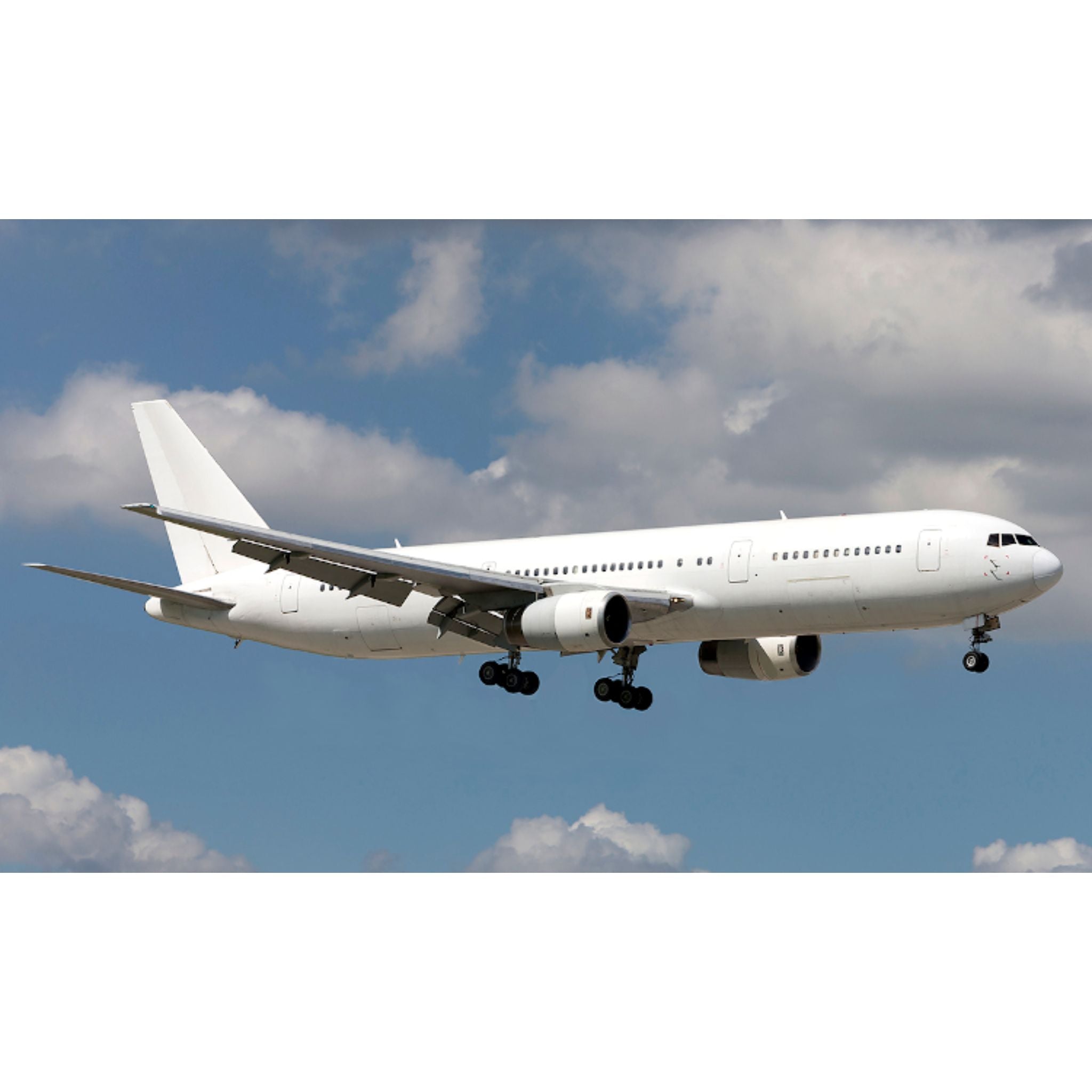
The Decline of the Boeing 767 and What’s Replacing It
If you’ve flown long-haul in the 1980s or 1990s, there’s a fair chance you were aboard a Boeing 767. This twin-engine wide‐body changed commercial aviation in many ways: more efficient than older four-engine jets, flexible for medium-to-long routes, and able to work both as a passenger airliner and later as a freighter or tanker. But today, the 767 is quietly being phased out of many passenger fleets—and there are several clear reasons why.
Today, we'll unpack:
-
what made the 767 significant;
-
why it’s now disappearing from passenger service;
-
what its likely future is (cargo, military, or storage).
Origins and significance of the 767
The Boeing 767 programme emerged in the late 1970s and early 1980s. Wikipedia Flightradar24
Some key points:
-
The 767 helped pioneer twin-engine long-haul flights (with ETOPS certification) meaning airlines could use fewer engines and less fuel for crossings that previously required four-engine jets. Flightradar24
-
Because of its size (not quite as large as the biggest wide-bodies), it offered a “sweet spot” for many routes: big enough to carry a decent number of passengers, but not so large that it became inefficient.
-
Over its production life, it served as a passenger jet, a freighter, and even a tanker (e.g., the military derivative KC‑46 Pegasus) – showing its adaptability. Wikipedia Flightradar24
-
At its peak, it was a major part of many airline fleets. But all good things—especially in aviation—have lifespans.
The gradual disappearance: why airlines are retiring the 767
So why is the 767 fading from view? There are multiple interlocking reasons, which I’ll break down:
1. Ageing airframes and rising maintenance/operating costs
Many 767s flying today are 20–30 + years old (the model entered service in the early 1980s). Wikipedia With age come issues: corrosion, fatigue, more frequent maintenance checks (D-checks), higher part-replacement costs. For airlines competing on cost, an older aircraft is a liability. Wikipedia
For example, one article noted dispatch reliability (how often the plane goes out when scheduled) has become problematic for older 767-300ERs.
2. Fuel efficiency and environmental pressures
The newer generation of wide-body twin-jets (for example the Boeing 787 Dreamliner, the Airbus A330neo) are substantially more fuel efficient, have lower emissions, better economics per seat. Airlines are under pressure from fuel costs AND from regulatory/environmental demands.
Older aircraft like the 767 simply can’t match those newer types, especially with fuel being a major cost in long-haul operations.
3. Fleet simplification and strategy shift
Airlines increasingly prefer to standardize their fleets (fewer types of aircraft), to reduce training, spare‐parts complexity, crew scheduling, maintenance logistics. If you have a mix of old 767s, old 777s, etc., the overhead mounts.
For example, airline United Airlines has publicly indicated plans to retire its 767 fleet as part of fleet renewal. Aeronews Journal
An article summarises:
“With the bulk of Delta’s 767 fleet due to be retired inside the next three years…”
4. Production end, limited future development
Production of the 767 as a freighter is slated to finish around 2027. The original passenger versions are long gone.
Without new orders or major upgrades, the model becomes less competitive. Airlines that want the latest cabin features (WiFi, better seats, improved aerodynamics) may favour newer types.
5. Market shifts and route structure changes
Travel patterns evolve. The demand for ultra-long-haul has grown, routes have changed, airlines might prefer larger or smaller aircraft depending on demand. The 767’s size may no longer be optimal for many routes.
One Reddit commentator put it nicely:
“Newer airplanes all have giant glider wings … the 767’s 156′ wingspan can fit into a lot of places that newer airplanes can’t.” reddit.com
While that suggests niche viability, it also reflects that the 767 is a model tailored to a past set of constraints (airport gate size, route distance) which are changing.
So, does that mean the 767 is gone? Not quite—just shifting roles
While passenger 767s are disappearing, the model isn’t completely going away. Here's how its future is shaping up:
-
Cargo/freighter role: Many of the remaining 767s are being converted to freighters or already operate as such. The model has found a strong second life hauling freight rather than passengers. Flightradar24
-
Military/tanker role: The 767 wide‐body platform is used for the KC-46 Pegasus tanker. So even as airlines phase it out for passengers, defence uses continue. Wikipedia
-
Phasing out over time: Airlines will retire them gradually—so you may still spot a 767 for years yet, especially outside of Europe or in niche markets.
-
Legacy impact: The 767 has paved the way for efficient twin-engine wide-body operations; its legacy lives on in the newer aircraft types.
What this means for aviation fans, aircraft spotters & airline passengers
-
If you’re into plane spotting: The 767 is becoming rarer in passenger service. It’s still around, but fewer airlines use it for major passenger routes.
-
If you're booking a long-haul flight: You might still get a 767, but increasingly you won’t—especially with large legacy carriers renewing fleets.
-
For airlines & analysts: The retirement of the 767 signals the broader trend—fleet modernization, environmental pressure, economics all pushing change.
Final thoughts
The Boeing 767 was a pioneering aircraft—flexible, efficient for its era, and widely used across the world. But the aviation industry doesn’t stand still. High operating costs for older airframes, fuel and emissions pressure, the need for fleet simplification, and strategic shifts in airline operations all mean the 767 is gradually being retired from passenger service.
Yet, it’s not disappearing completely—it’s evolving. From passenger planes to freighters and tankers, the 767 still has a story to tell.


Leave a comment
This site is protected by hCaptcha and the hCaptcha Privacy Policy and Terms of Service apply.